
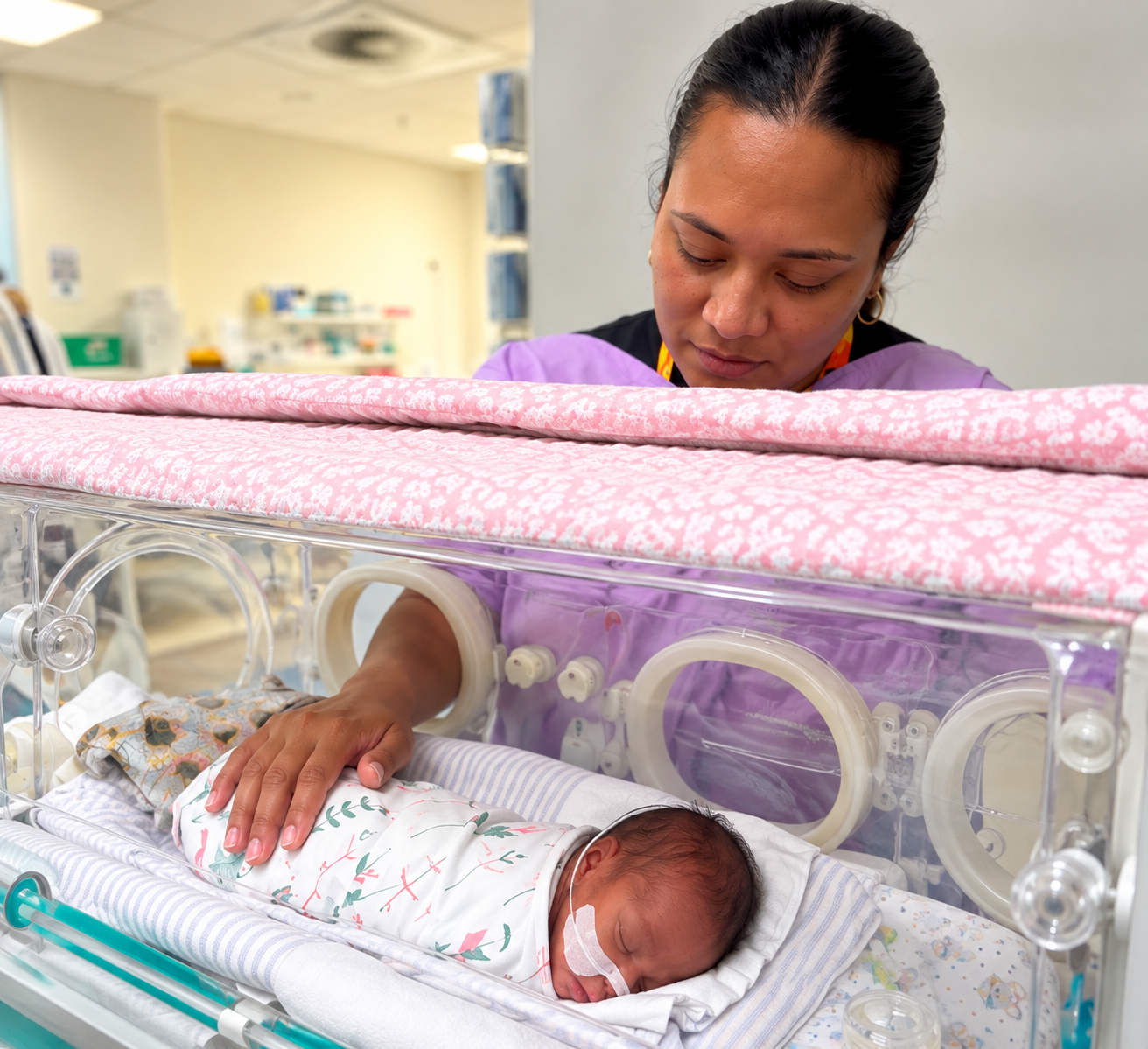
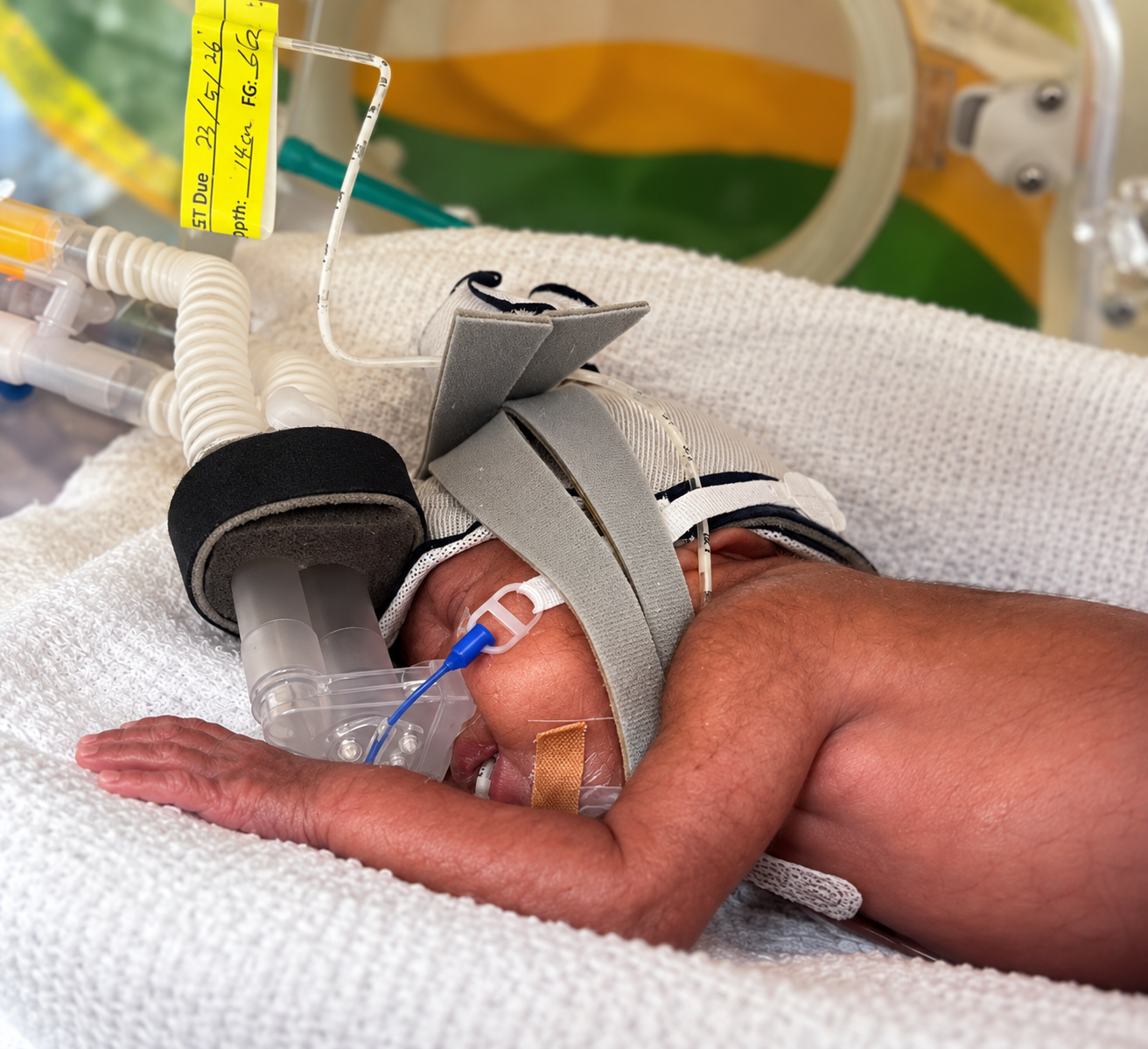

An extraordinary birth recently moved Australia. Makerita Miracle Tanuvasa came into the world after only 21 weeks and three days of gestation, at an extremely early stage where the chances of survival remain very low.
At her birth, on March 25, 2026, at the Royal Brisbane and Women’s Hospital, in Queensland, the little girl weighed only 351 grams and measured 30.5 centimeters. She is now considered the most prematurely born baby to have survived in Australia.
A pregnancy discovered almost at the last moment
The story is all the more astonishing as her mother, Annrose Tanuvasa, did not think she was at such an advanced stage of her pregnancy.
Just a few days before the birth, she consulted after feeling unusual movements in her belly. She then learned that she was about 22 weeks pregnant.
The situation was particularly confusing for the family: a few months earlier, in December 2025, Annrose thought she had miscarried. Medical evidence examined later led to the conclusion that it was most likely the same pregnancy, with the initial hypothesis of a twin pregnancy in which one fetus had not continued its development.
Just five days after learning her pregnancy was already so advanced, she gave birth.
Months of care for a few hundred grams of life
Then began a considerable struggle for this 351-gram baby.
During her first weeks, her condition required intensive neonatal care. Her parents had to wait approximately one month before they could truly hold her and practice skin-to-skin contact.
The little girl then spent long weeks hospitalized, including 14 weeks in neonatal intensive care.
Then came what her family had hoped for for months: early August, Miracle could finally go home, more than four months after her birth. She even left the hospital without needing oxygen.
An exceptional case that should not overshadow the reality of extreme prematurity
Miracle's story is extraordinary, but it does not mean that survival at 21 weeks has become commonplace.
A scientific study published in August 2026 in the Journal of Perinatology specifically highlights that the survival of children born at 21 weeks remains rare and concerns very selected situations. The authors also recall that medical and neurodevelopmental consequences can be significant and that available data at such an early term remains limited.
Each situation is therefore different, and management depends notably on the exact term, the baby's weight, its condition at birth, and the capabilities of the neonatal team.
A story that shows how far neonatal medicine can sometimes go
At 351 grams, Miracle began her life in conditions that are hard to imagine.
Her journey remains exceptional and obviously cannot predict the outcome of another extremely premature birth. But her story illustrates the considerable progress made in the care of certain newborns at the limits of viability.
A few months after coming into the world long before the due date, this tiny girl was finally able to discover her home and reunite with her family.
A rare story, between medical progress, intensive care, and the incredible fragility of the very first moments of life.
Your comments
Be the first person to comment.